Florida homeowner guide
Does Window Film Actually Reduce Heat in Florida Homes?
Practical answers for a more comfortable home.
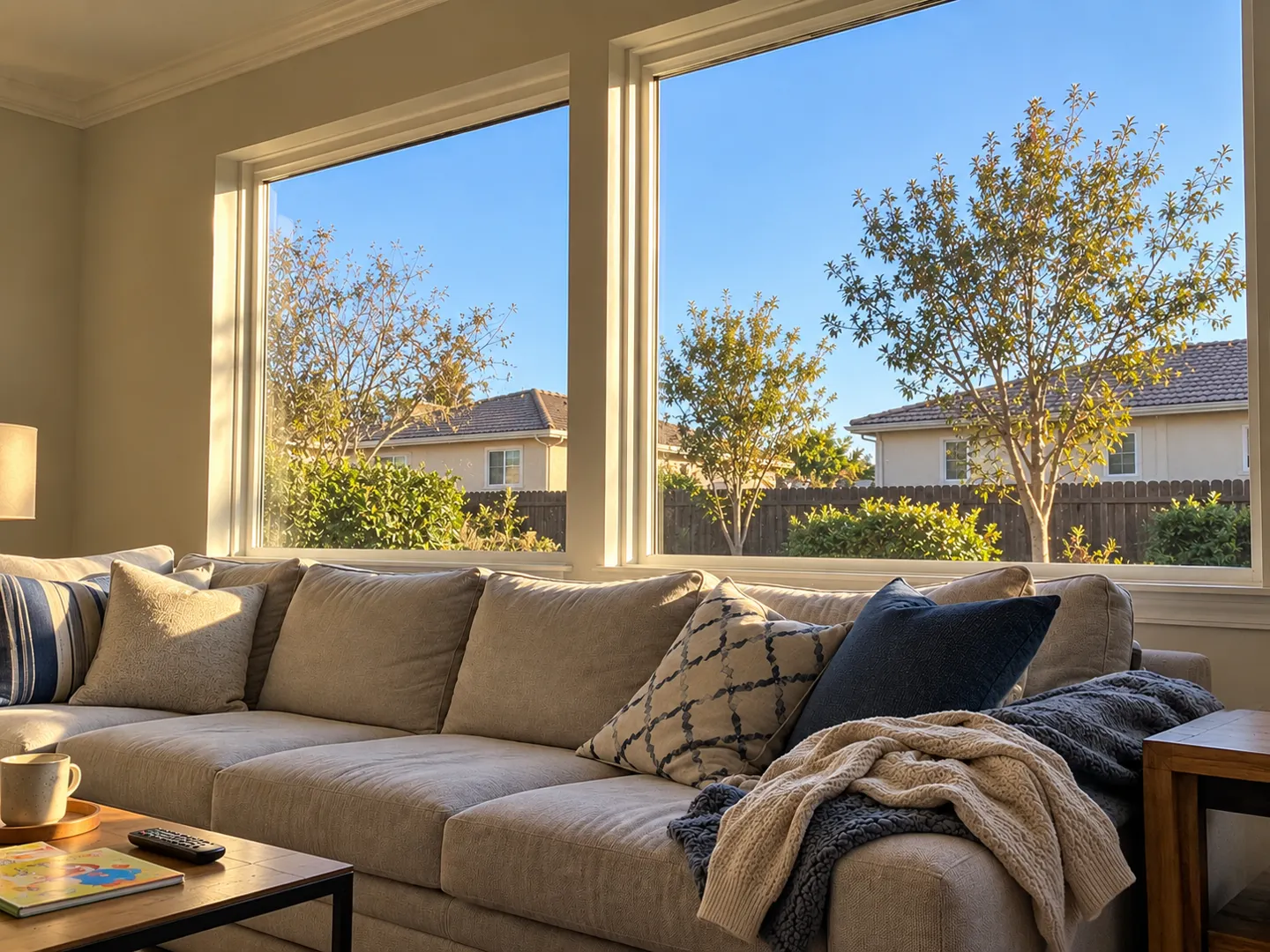
Yes. A suitable solar-control window film can reduce the sun’s heat entering through the glass on which it is installed. The U.S. Department of Energy describes window film as a way to limit solar heat gain, glare, and UV exposure. That is a narrower, more useful claim than saying a film will cool an entire Florida house by a set number of degrees.
Why a particular room gets hot
Solar radiation passes through a window and warms nearby surfaces. Sun direction, window area, existing glass, roof overhangs, trees, and room layout shape the result. A west-facing slider behind the couch may be a larger problem than several shaded windows elsewhere. Film acts at that glass surface; it does not repair air leaks, a damaged insulating glass unit, an undersized AC system, or roof heat.
How to compare films
Ask for total solar energy rejected or a whole-window solar-heat-gain measure on the relevant glazing, alongside visible light transmission and reflectivity. A large infrared-rejection percentage may describe only part of the solar spectrum and cannot, by itself, tell you how much total heat the installed glass-and-film system rejects. A darker-looking sample may cut more visible glare but is not automatically the best choice for someone who wants daylight.
The film also has to suit the existing pane. Double-pane, Low-E, laminated, and tempered glass may require different assessments. Manufacturer data measured on clear single-pane glass should not be applied directly to every Orlando window.
What should you expect?
Expect a room-specific improvement when direct sun through glass is a significant cause of discomfort, with results changing by time of day. Cooling energy may fall, but no provider should promise a specific utility-bill result without evaluating the house. Choose a product by measured performance, compatibility, and its look in your own window.
FAQs
Can almost-clear film reject heat? Some products do, but performance depends on their specifications and your glass. Will it work at night? Solar-control film reduces incoming sunlight; it is not a nighttime cooling device. Should I film a shaded north-facing window? Maybe for UV or privacy, but it may not be the best heat-control priority.